
Why 3D Mockups Are Revolutionizing How Brands Design, Showcase, and Sell Products
The way products are visualized has undergone a remarkable transformation. Not long ago, bringing a product to life meant physical prototypes, studio photography, and costly revisions. Today, 3D product mockups are rewriting that entire process. They allow brands, designers, and entrepreneurs to create stunningly realistic representations of products long before they exist in the physical world. This shift is more than technological—it is strategic. In a fast-paced digital economy where speed, flexibility, and visual impact matter more than ever, 3D mockups offer a powerful advantage. They bridge the gap between imagination and reality, giving creators the ability to test, refine, and present ideas with unprecedented precision. As industries continue to embrace digital-first workflows, 3D product mockups are quickly becoming the standard for product visualization.
A: It is a digital 3D representation of a product that simulates real-world appearance and materials.
A: They offer more flexibility and scalability, though both can be used together depending on needs.
A: Yes, most high-quality mockups require specialized 3D modeling and rendering tools.
A: Absolutely, they are widely used for product pages, ads, and interactive experiences.
A: With advanced rendering, they can be nearly indistinguishable from real photos.
A: Yes, especially over time since one model can produce many visuals.
A: Yes, through 360-degree views or augmented reality features.
A: E-commerce, product design, fashion, tech, furniture, and many others.
A: It varies depending on complexity, but simple models can be created relatively quickly.
A: The ability to visualize, test, and market products without needing physical production first.
What Are 3D Product Mockups?
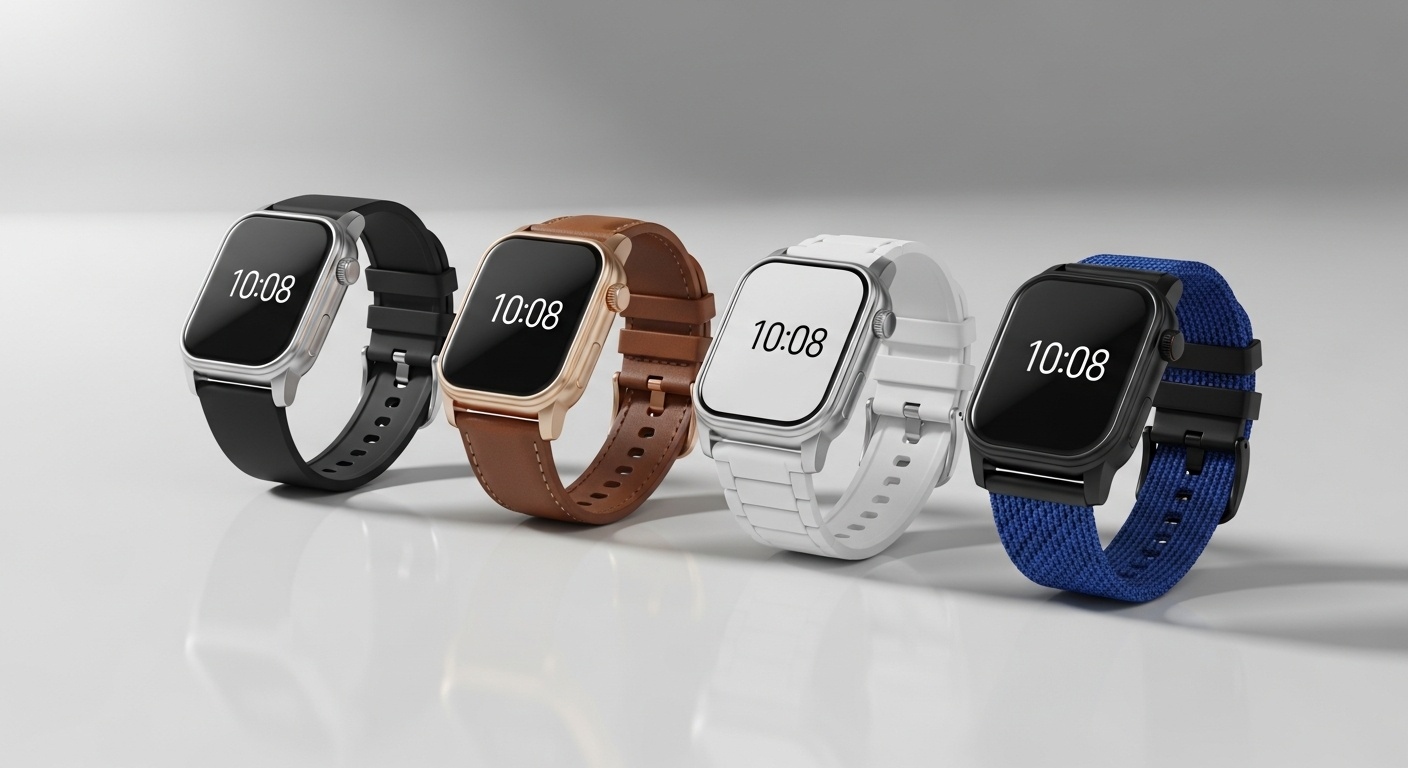
At their core, 3D product mockups are digital representations of products created using three-dimensional modeling and rendering software. Unlike traditional 2D mockups, which rely on flat images or layered graphics, 3D mockups simulate depth, lighting, texture, and perspective.
These mockups can be rotated, zoomed, and viewed from multiple angles. They can also be placed into realistic environments, allowing brands to showcase products in context. Whether it is a sleek cosmetic bottle, a high-end electronics device, or a piece of furniture, 3D mockups can bring products to life in ways that static images cannot. The result is a visualization that feels tangible, immersive, and highly convincing.
Why 3D Mockups Are Taking Over
The rise of 3D product mockups is driven by a combination of technological advancements and changing consumer expectations. Today’s audiences are highly visual. They expect to see products clearly, from multiple angles, and often in real-world scenarios before making a purchase.
3D mockups meet these expectations while also offering significant advantages to businesses. They eliminate the need for repeated photoshoots, reduce production costs, and allow for rapid iteration. Designers can adjust colors, materials, and details instantly without rebuilding physical prototypes.
This flexibility is especially valuable in e-commerce, where visual presentation plays a critical role in conversion rates. A well-rendered 3D mockup can communicate quality, functionality, and design in a way that traditional photography sometimes cannot.
The Power of Realism
One of the most compelling aspects of 3D product mockups is their ability to achieve near-photorealistic quality. Advances in rendering technology have made it possible to replicate the way light interacts with different materials, from glossy plastics to brushed metals and soft fabrics.
This level of realism creates trust. When a product looks real, it feels real. Customers are more likely to engage with and purchase products that appear authentic and well-crafted. Realism also enhances storytelling. A product can be shown in a carefully designed environment, with lighting and composition that evoke a specific mood or lifestyle. This transforms the mockup from a simple representation into a powerful marketing tool.
Speed and Flexibility in Design
Traditional product development often involves multiple rounds of prototyping, each requiring time, materials, and cost. 3D mockups streamline this process by allowing designers to experiment digitally.
Changes that once took days or weeks can now be made in minutes. Colors can be swapped, textures adjusted, and components reconfigured with ease. This rapid iteration enables teams to explore more ideas and refine designs more thoroughly.
It also allows for better collaboration. Designers, marketers, and stakeholders can review and provide feedback on realistic visuals early in the process, reducing the risk of costly revisions later.
Enhancing E-Commerce Experiences
In the world of online shopping, visuals are everything. Customers cannot touch or try products, so they rely heavily on images to make decisions.
3D product mockups elevate this experience by providing interactive and detailed views. Products can be displayed from every angle, allowing customers to explore them as if they were holding them in their hands.
Some platforms even integrate 360-degree viewers or augmented reality features, enabling customers to place products in their own environments. This level of engagement not only improves user experience but also builds confidence in purchasing decisions.
As e-commerce continues to grow, the demand for high-quality product visualization will only increase.
Marketing Without Limits
One of the most exciting aspects of 3D mockups is their versatility in marketing. A single 3D model can be used to create an entire suite of visuals, from product pages and social media content to advertisements and promotional materials.
Because the product exists digitally, it can be placed in any environment, under any lighting condition, and styled in countless ways. This opens up creative possibilities that would be difficult or expensive to achieve with traditional photography.
Seasonal campaigns, limited editions, and concept designs can all be visualized quickly, allowing brands to stay agile and responsive.
Cost Efficiency and Scalability
While creating high-quality 3D models requires an initial investment, the long-term cost savings can be significant. Once a model is built, it can be reused and adapted for different purposes. This reduces the need for repeated photoshoots, physical samples, and shipping logistics. It also allows brands to scale their visual content more efficiently, producing a large volume of images without a corresponding increase in cost. For startups and small businesses, this scalability can be especially valuable, enabling them to compete with larger brands in terms of visual quality.
The Role of Lighting and Composition
In 3D product mockups, lighting and composition are just as important as the model itself. They determine how the product is perceived and can dramatically influence its appeal.
Soft, diffused lighting can create a clean and modern look, while dramatic lighting can add depth and intrigue. Shadows, reflections, and highlights all contribute to the overall realism.
Composition guides the viewer’s attention. The placement of the product, the angle of the camera, and the surrounding elements all work together to create a compelling image. These artistic considerations are what elevate a good mockup into a great one.
Bridging Design and Reality
One of the most powerful aspects of 3D mockups is their ability to bridge the gap between concept and reality. They allow designers to visualize ideas with clarity and precision, making it easier to bring those ideas to life.
This is particularly important in industries where accuracy matters, such as product design, architecture, and manufacturing. A well-crafted mockup can serve as a blueprint, guiding the production process and ensuring that the final product aligns with the original vision.
In this way, 3D mockups are not just a visualization tool—they are an integral part of the design process.
The Future of Product Visualization
As technology continues to evolve, the capabilities of 3D product mockups will only expand. Real-time rendering, virtual reality, and artificial intelligence are already beginning to shape the future of visualization.
Imagine being able to interact with a product in a fully immersive virtual environment, or to customize it in real time before making a purchase. These experiences are becoming increasingly possible.
The line between digital and physical is blurring, and 3D mockups are at the forefront of this transformation.
Seeing What’s Possible
3D product mockups represent more than a technological advancement—they represent a new way of thinking about design, marketing, and communication. They empower creators to visualize ideas with clarity, to experiment without limits, and to present products in ways that captivate and inspire. As businesses continue to embrace digital innovation, those who leverage the power of 3D visualization will be better positioned to stand out, connect with audiences, and bring their ideas to life. In a world where first impressions are often made through a screen, the ability to create compelling, realistic visuals is not just an advantage—it is essential.